Kexin Feng and Pablo Valenzuela Casasempere on using economic history to inform current policy

The economics of technology, innovation, and employment are a fast-growing area of interest as technologies reshape the economy and the labor force and governments try to respond with the best policies for their populations. But to learn how government policies can boost or hinder economic growth, some economists are using new methods to look back in history and learn from prior precedents. Kexin Feng and Pablo Valenzuela Casasempere are postdoctoral associates in Yale Economic Growth Center’s Program in Economic History, who are combining historical and economic methods to research how economies evolve across time and space.
Their research demonstrates how the study of economic history can translate into specific, policy-relevant insights. Feng studies the Warlord Era in China, a period from 1916 to 1928 of significant political instability, and its role in Chinese economic development. She hopes her research of this unique time period of both political turmoil and considerable economic growth can provide insights for developing countries hoping to adopt new technologies and industrialize. Valenzuela Casasempere also looks at the early 20th century, focusing on the Works Progress Administration (WPA), the largest employment relief program ever implemented in the US. With its size and wide variety of projects, the WPA offers a unique setting to study how large-scale government programs can change cities.
Different Paths to Economic History
Feng describes her journey to economic history as a combination of home and school influences. Her interest in history started at an early age. “My grandma was a high school teacher in history and my father loved history,” she said. “He read a lot of history books at home, so I also began to read history books when I was very young.”
After taking an AP economics class in high school, Feng became interested in how economics uses mathematical models to model human decision making processes. It was during her PhD in economics at the California Institute of Technology that Feng reconnected her lifelong interest in history with economics, ultimately leading her to choose China’s Warlord Era as a dissertation topic. Having grown up in China, Feng was already familiar with Chinese history and recalled how textbooks often glazed over the Warlord Era due to its brevity. This sparked her interest in the period.
“I came across some economic data during this period and actually, I realized, there was considerable growth during this period,” said Feng in an EGC interview. “Despite the political instability, China began to industrialize, and there were a lot of commercial activities during this period. So I was wondering, okay, this period may be quite important in China's history.”
Valenzuela Casasempere, on the other hand, grew up in Chile and became interested in economics first, only turning to history later in his academic career. While working towards his PhD in Economics at the University of British Columbia, he realized that the economic questions he found the most compelling required looking back in time. It was his curiosity about the displacement caused by the Interstate Highway System that led him to economic history.
“It was very idiosyncratic,” he said while describing his journey to economic history in a recent EGC interview. “I was genuinely interested in knowing why highways are located where they are and what factors lead to their placement – we know very little about the Interstate Highway System in the US, which is one of the defining urban factors in America. But the system happened to be developed in the fifties; once I assumed I was an economic historian, it was easier to start thinking in a different mindset."
Research, Methodologies, Findings
The work of an economic historian begins with what Feng describes as an arduous task — data collection. Unlike contemporary economists who might download digital datasets, economic historians must often build theirs from scratch using physical archives. Feng spent months digitizing records kept in both English and Chinese by Chinese Maritime Customs, which monitored foreign trade, to study China’s industrialization and commercial growth during the period. She applies the economic concept of "Creative Destruction”; during the Warlord Era, the collapse of a central government meant there were no authorities to restrict the economy. This created a newly liberalized space for the market to function and adopt new technologies.
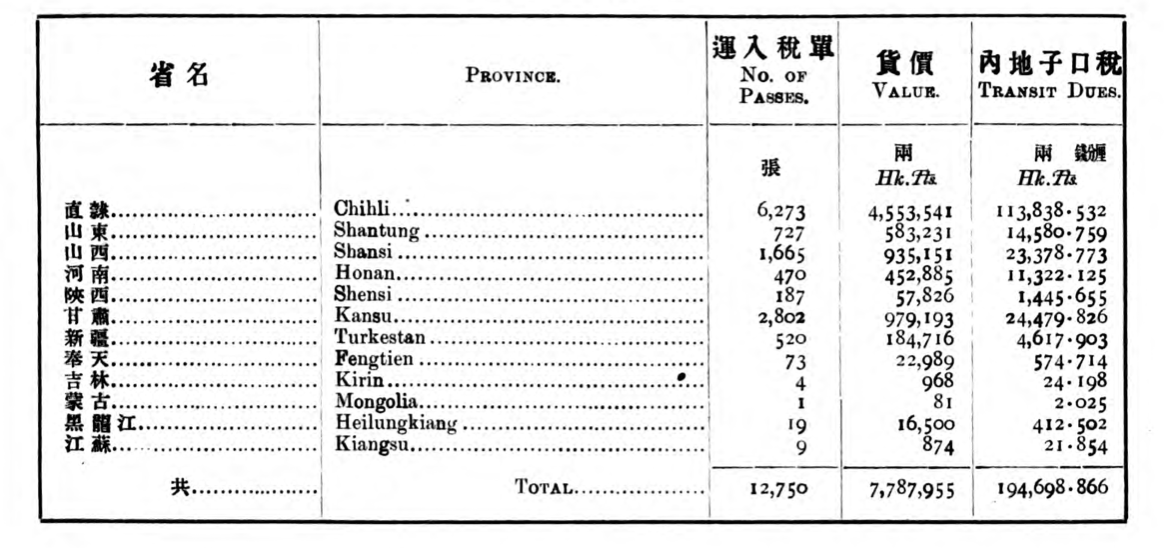
Historical records from Chinese Maritime Customs.
In his current work, studying how the Works Progress Administration (WPA) employment and infrastructure programs impacted city economies, Valenzuela Casasempere accessed a database of 11 million scans from the National Archives in D.C., representing roughly 400,000 WPA projects. In order to parse the scans, he employs Large Language Models (LLMs) to extract data and geocode the locations of the historical projects. By analyzing the massive surge in government-funded projects under the WPA, he aims to show how the WPA influenced labor markets, helping create "city success” long before the war effort. He thinks the WPA offers a unique setting to study this phenomenon due to how extensively and quickly it was implemented, and the wide variety of projects that it funded: bridges, airports, art installations, and even sewing projects. Valenzuela Casasempere sees this as an important contribution to our understanding of how the Great Depression ended, given the widespread belief that the U.S. did not recover from the Great Depression until the World War II effort.
![[Photograph of a man in work clothes. He is wearing gloves and a cap and has a pipe in his mouth. A pole, possibly to a shovel, is under his right arm. He is holding an oblong piece of paper. A large sign on the right reads **USA** as the top line, WORK as the second, PROGRAM as the third and WPA as the bottom line. Seen in the background are wheelbarrows and a church steeple.]](/sites/default/files/2026-05/69-N-19626_2009_001_AC.png) Courtesy National Archives
Courtesy National Archives
A Works Progress Administration worker receives his paycheck, 1939.
Implications of their Research
Although Feng and Valenzuela Casasempere both study events that occurred decades ago, both scholars believe their research can provide today’s policymakers with valuable insights.
“I hope my research could provide some insights into technology, how to adopt new technologies for developing countries,” said Feng, offering an example of how modern infrastructure projects may have unintended consequences. While better roads facilitate the import of helpful machinery, they also allow foreign consumer goods to flood local markets, potentially stifling domestic producers. She hopes her research will inform policymakers on how to be cautious when considering the overall effects of trade-related infrastructure.
Valenzuela Casasempere believes that studying the largest employment relief program in American history can provide unique insights into how government spending on unemployment relief affects the labor market. “There are consequences for the government spending money in the labor market, and how that affects the industry composition, the manufacturer, and the types of jobs some people employ in a place."
Coming to Yale
Valenzuela Casasempere, although raised in Chile and having studied in Canada, was always interested in the economic history of the US. He points out how his current home exemplifies his academic interests. “I live in a city where Interstate 91 destroyed half of the Italian neighborhood. Wooster Square and its surroundings are bisected by I-91. So I now experience and see it in my day to day basis, rather than something I read in books. Now I live in a city that is a reflection of my dissertation.”
 Emilie Foyer
I-91 in New Haven, Connecticut before 2016 interchange reconfiguration.
For Feng, the mentorship she found at Yale through Program Director Dr. Leah Boustan and Associate Professor of Economics Dr. Jose Espin-Sanchez was very formative. “I believe I can learn a lot from Leah and Jose, and so that's why I chose Yale and I really value this opportunity.”
Looking forward
Both Feng and Valenzuela Casasempere have new projects that expand upon their area of expertise, bringing in new countries that they have not previously researched.
Feng is currently exploring "Knowledge Codification," a project comparing how China and Japan adapted 19th-century European technology by creating new languages for chemical elements and machinery. She is also collaborating with Yale students to study how the spread of communist ideology influenced labor strikes in 1920s China. For his part, Valenzuela Casasempere plans to bring his urban economic lens back to his roots in Chile. He hopes to study the long-term effects of slum clearances during the Pinochet regime, investigating how the forced relocation of residents in the 1980s permanently altered the segregation and economic heart of Santiago.
Both hope to continue advancing understanding of current hot topics - technological adaptation in Asia, and urban economic policy - by applying economic methodology to important episodes in history.