EGC Quarterly Newsletter, Summer 2026: Celebrating Our Graduates

Celebrating the Class of 2026
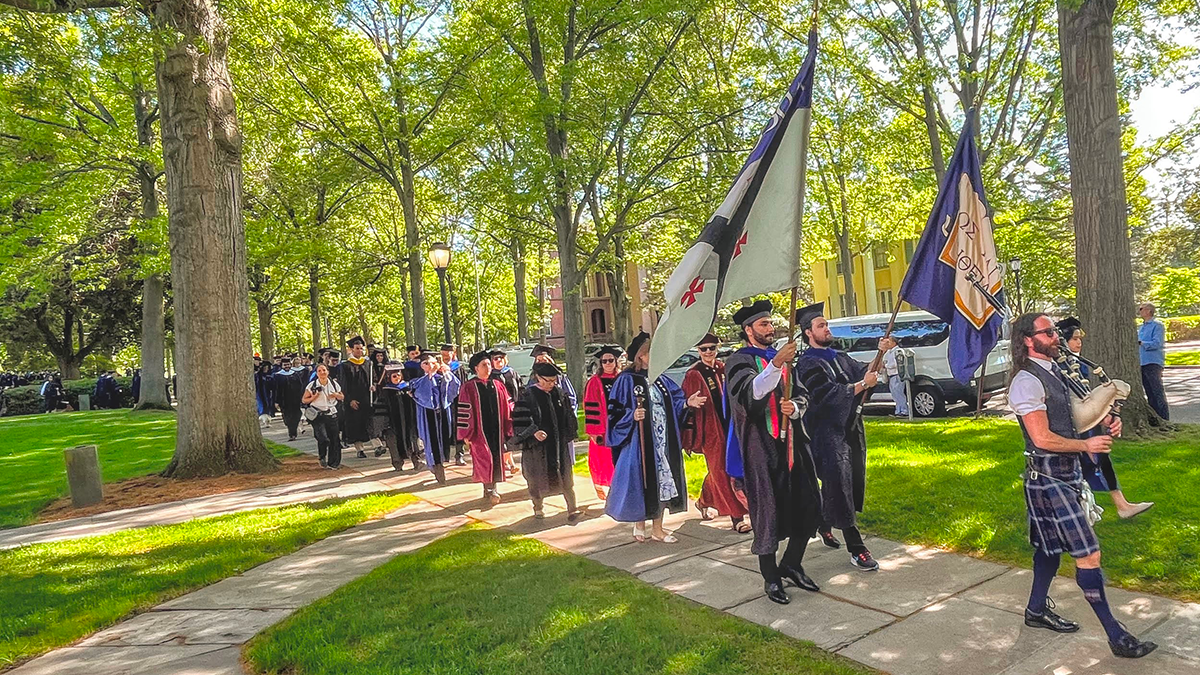 Jeff Mosenkis
Today we congratulate a diverse group of Yale graduates at different levels, who are moving on to the next steps in their lives and careers: our graduating economics PhD students; the International and Development Economics (IDE) Masters students who are moving on to PhD programs and a variety of research and policy jobs; our departing postgraduate associates who have helped enable a wide array of EGC research; and the graduating seniors in EGC’s network, including interns who have contributed to many areas of our work.
The Economic Growth Center community congratulates them on their achievements and looks forward to their next steps. We present an overview here while inviting you to read our Commencement news article with many more details and reflections!
2026 Yale Economics PhDs in Development & Trade
Tianyu Fan will join the Chinese University of Hong Kong (CUHK) as an Assistant Professor of Economics; Christina Qiu will join the Department of Economics at Miami Herbert Business School as an Assistant Professor; Yan Yan will join the research division of Uber Technologies Inc.
The IDE Class of 2026
 Anna Groesser
This year’s graduates of the International and Development Economics Master’s program will go on to a variety of positions in consulting, government policy, and academia including Compass Lexecon, Charles River Associates, the Singapore Economic Development Board, and predoc positions at Yale's Tobin Center, The Wharton School at the University of Pennsylvania, the Development Innovation Lab at Chicago, and Harvard Business School.
EGC Postgraduate Associates
Adaolisa Ezekobe is exploring research and policy roles before pursuing a PhD; Camilla Sarzo will move to Rwanda to continue working on projects related to firms, trade, and economic development; Harnoor Kaur will begin a PhD at the Stanford Graduate School of Business.
Yale College Class of 2026
We also celebrate the achievements of Yale undergraduates who studied international development – particularly those who worked with us as EGC Interns. During their time with us, they analyzed data from key ongoing research projects, wrote articles about a range of international development research, and helped plan and run our many events.
In Conversation

Leah Boustan, Douglas Irwin, & Amit Khandelwal on trade and migration, past and present
Trade and migration have long shaped economic growth and productivity. Three economists discuss how trade and immigration policy have evolved over time – and what today’s policy shifts mean for the global economy.
Spotlight
 Jeff Mosenkis
Kexin Feng and Pablo Valenzuela Casasempere on using economic history to inform current policy
EGC postdocs Kexin Feng and Pablo Valenzuela Casasempere combine historical and economic methods to research how economies evolve across time and space.
News
 Boudhayan Bardhan, Unsplash
EGC affiliates awarded new grants from Yale Planetary Solutions
Three EGC affiliates have received 2026 grants from Yale Planetary Solutions (YPS) to support research at the intersection of environmental sustainability and economic development.

From Conflict to Development Economics: Clair Kevin Nshimirimana’s journey to Yale
Growing up in Burundi during a period of conflict and political instability, Clair Kevin Nshimirimana spent much of his childhood on the move. Born during the civil war that began in 1993, his family was among the thousands internally displaced by the conflict – repeatedly uprooted as violence spread from city to city and region to region in search of safety and stability. Later this month, he will graduate from the International and Development Economics (IDE) program, a one-year master’s program that trains students in economics and development.
Watch: Douglas Irwin Delivers the 35th Kuznets Lecture
 Alida Zimmerman
Douglas Irwin delivers the 35th Simon Kuznets Memorial Lecture at Yale University on March 26, 2026.
Douglas Irwin (Dartmouth) delivered the 35th Simon Kuznets Memorial Lecture, “Trade Policy and Exchange Rate Reform: A Look Back at History.”
Events
 Alida Zimmerman
Trade Reform, Exchange Rates, and Economic History
On March 27, 2026, the EGC hosted a mini-conference highlighting research by early- and mid-career scholars, building on themes from the 35th Kuznets Memorial Lecture, “Trade Reform, Exchange Rates, and Economic History,” delivered by Douglas Irwin of Dartmouth College.
 Nathalie Raschka
Call For Papers: Firms, Trade, and Development Conference 2026
The International Growth Centre (IGC) and Yale Economic Growth Center (EGC), in collaboration with the Cowles Foundation for Research in Economics at Yale University and the LSE Global School of Sustainability, are hosting a two-day conference on September 10–11, 2026, on the theme of “Firms, Trade, and Development.” The Call For Papers is now open, and this year's program will include a new dedicated session on climate, energy, and the environment. The submission deadline is Friday, 1 June 2026 at 23:59 EDT (GMT-4).
Recent Publications
Bergemann on non-linear pricing models; Felix on employment preferences of workers in Brazil's largest favela complex; Goldberg and Meghir on the effects of international trade in the presence of a set of domestic distortions giving rise to informality; Restrepo on the effects of automation in a task-based economy.