Knowledge Hub
Understanding Spain's Colonial Expansion
The story of Spain's colonial expansion is inseparable from the story of the modern world. From 1492 onward, Spanish voyages across the Atlantic launched one of the largest and most sustained movements of people in history. Soldiers, settlers, clergy, and enslaved peoples—both voluntary and forced migrants—crossed the ocean to build a new empire that would span from Mexico to the Andes, from the Caribbean to the Río de la Plata.
This vast network of movement reshaped economies, societies, and environments on both sides of the Atlantic. Spain's imperial project was not only about conquest and governance—it was also about connection. New institutions, trade routes, and flows of knowledge linked distant territories and created what historians now call the first global world economy.
Featured Datasets
Composing Spain

Leticia Arroyo Abad (CUNY & CEPR), José-Antonio Espín-Sánchez (Yale & CEPR) and Miguel Angel Lafuente (Murcia)
The first population counts for Spain at the municipality and district levels for the early 16th century. Using primary and secondary sources, we assembled a new geolocated dataset revealing the geographical distribution of Spain's population at the eve of imperial expansion.
In this paper we present the first population counts for Spain at municipality and district levels for the early 16th century. Using an array of primary and secondary sources, we assembled a new geolocated dataset of population counts for Spain in the early 16th century at contemporary municipality and district levels.
Our contribution sheds light to the geographical distribution of population of Spain at the eve of its imperial expansion. It will serve as a starting point to understand the population dynamics in the metropolis in these momentous times.
First Numbers of the Americas
Leticia Arroyo Abad (CUNY and CEPR) & José-Antonio Espín-Sánchez (Yale & CEPR)
The first comprehensive dataset on Spanish migration to Spanish America for the entire colonial period (1492-1830). Covering over 250,000 individual migrant records, this dataset opens new avenues for research on migrant networks, elite formation, social mobility, and economic development.
This paper presents the first numbers on Spanish migration to Spanish America forthe colonial period (1492-1830). We analyze quantitative patterns, geographic origins and destinations, gender, and migrant human capital. Drawing on a wide array of primary and secondary sources, we provide the first comprehensive dataset covering for the entire colonial period. This dataset opens new avenues for research on migrant networks, elite formation, social mobility, and the links between migration and long-run economic development.
Gambling for America: The First Wave (1492-1540)

Leticia Arroyo Abad (CUNY & CEPR), José-Antonio Espín-Sánchez (Yale & CEPR), Yannay Spitzer (Hebrew & CEPR), and Ariell Zimran (Vanderbilt & NBER)
Columbus’ first expedition inaugurated one of the most important migrations in history. Glory, service, and wealth motivated thousands of migrants to leave Europe to the “New World.” In this paper, we study the first wave of migration to these new territories from 1492 to 1540 armed with a newly assembled database of European free migrants departing from Spain to the Spanish Americas. We find that at least 19,000 people left Spain to try their luck in the New World. This historical accident allows us to study the emergence of migration networks in host and destination locations. One-third of all migrants left their homes in the provinces of Sevilla and Badajoz. This pioneer wave of migration settled first in the Caribbean but as explorers pushed the American frontier, the destination menu expanded to include what would become the pillars of the Spanish empire, Mexico and Peru. Moving forward, we will delve into the factors contributing to the formation and development of these networks over time.
HistorIA: Using AI to Track Historical Migration

Sample of sources processed with AI
Leticia Arroyo Abad (CUNY & CEPR), José-Antonio Espín-Sánchez (Yale & CEPR), and Fernanda Serna Godoy (Yale)
This project develops a cutting-edge, large-scale database built from both primary and secondary historical sources. With over a billion records to process, traditional manual methods are no longer feasible. To meet this challenge, we harness advanced AI technologies to automate text extraction, classification, and analysis—transforming vast collections of historical data into a structured, searchable, and scalable resource for research and discovery.
Key Migration Patterns
The Scale of Migration
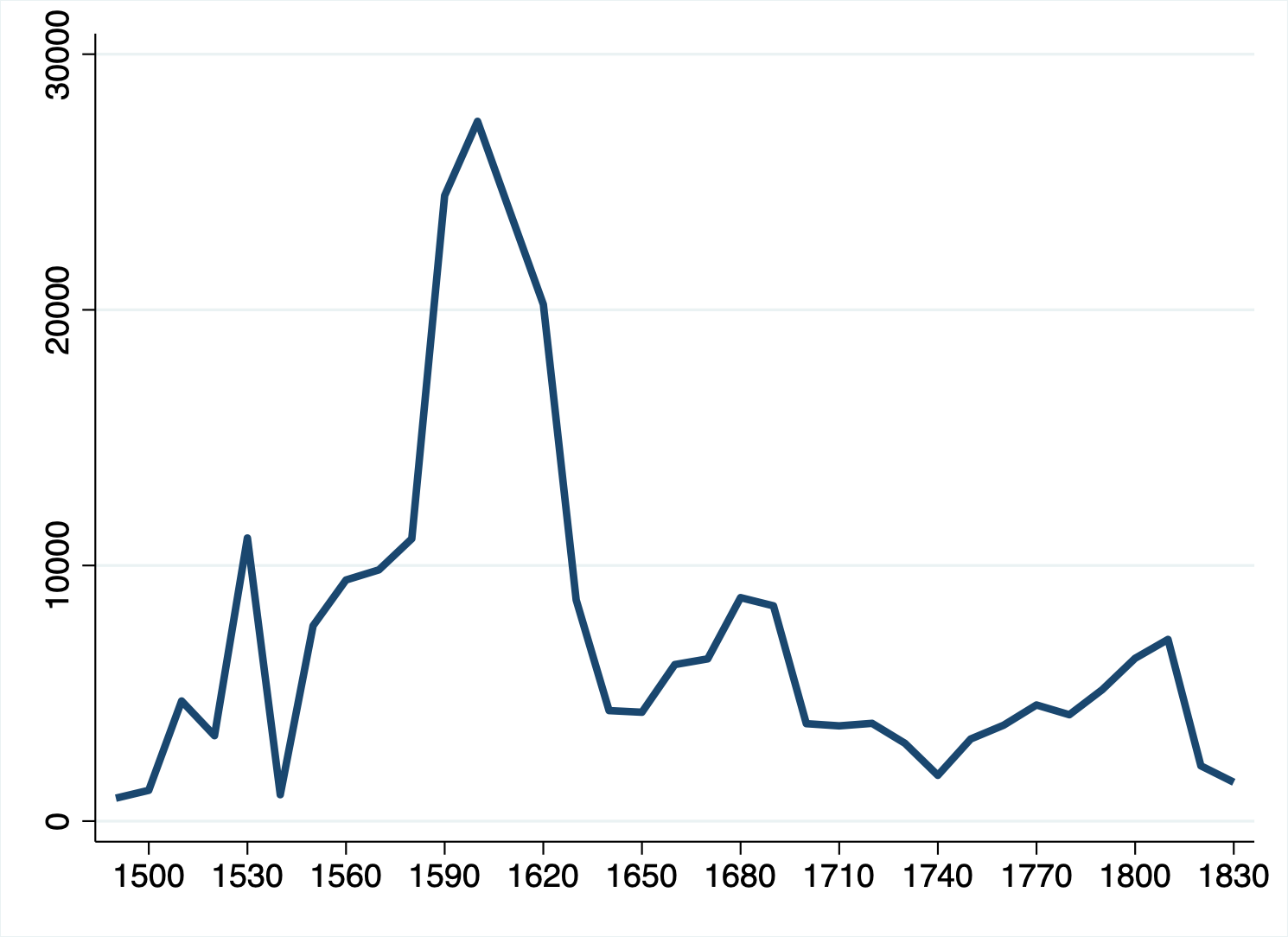
Between 1492 and 1830, more than a quarter million Spaniards migrated to Spanish America. Migration was highly cyclical: early exploration and conquest (1490–1550) were followed by a century-long lull, then a resurgence in the late 18th century driven by Bourbon reforms and expanding trade routes.
Where They Came From
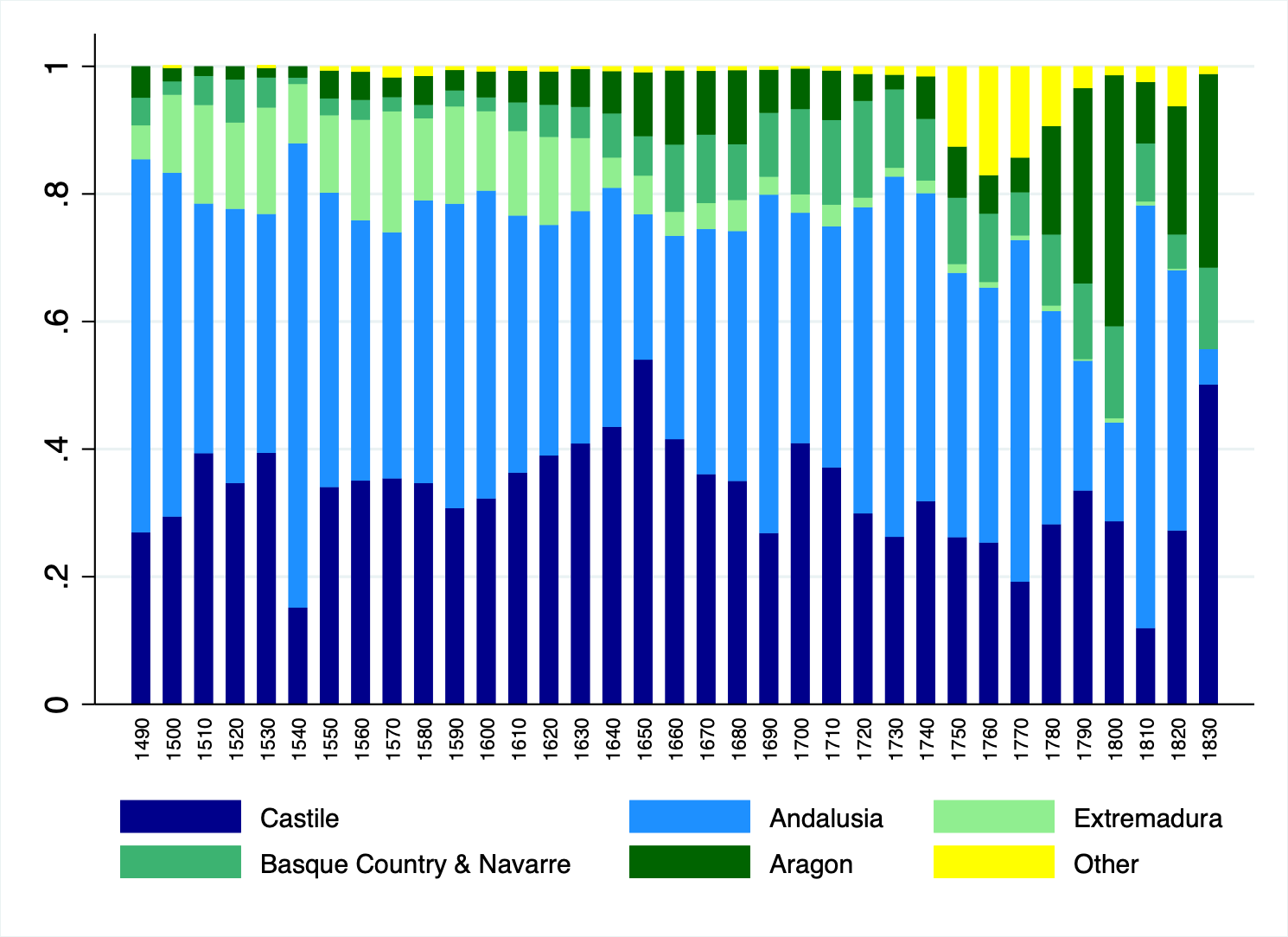
Most migrants originated in Andalusia, Extremadura, and Castile, regions close to Seville—the imperial gateway to the Americas. Over time, migration networks diversified: by the 18th century, Catalonia, Galicia, and the Basque Country became important contributors.
Where They Went

Destinations mirrored the empire's shifting geography. Early migration centered on the Caribbean, later replaced by the twin hubs of Mexico and Peru—the economic and administrative pillars of the empire. From the late 17th century onward, new viceroyalties gained prominence.
Who They Were

Migration was overwhelmingly male, but women's participation rose at key moments. During the mid-16th century, women made up nearly 30% of migrants, as family settlement policies encouraged migration with spouses and dependents.
Mapping Empire: Spanish Colonial Expansion
Understanding migration across the Spanish Empire requires reconstructing the spaces people inhabited, built, and transformed. The same individuals who crossed the Atlantic were responsible for founding cities, expanding frontiers, and shaping the geography of empire.
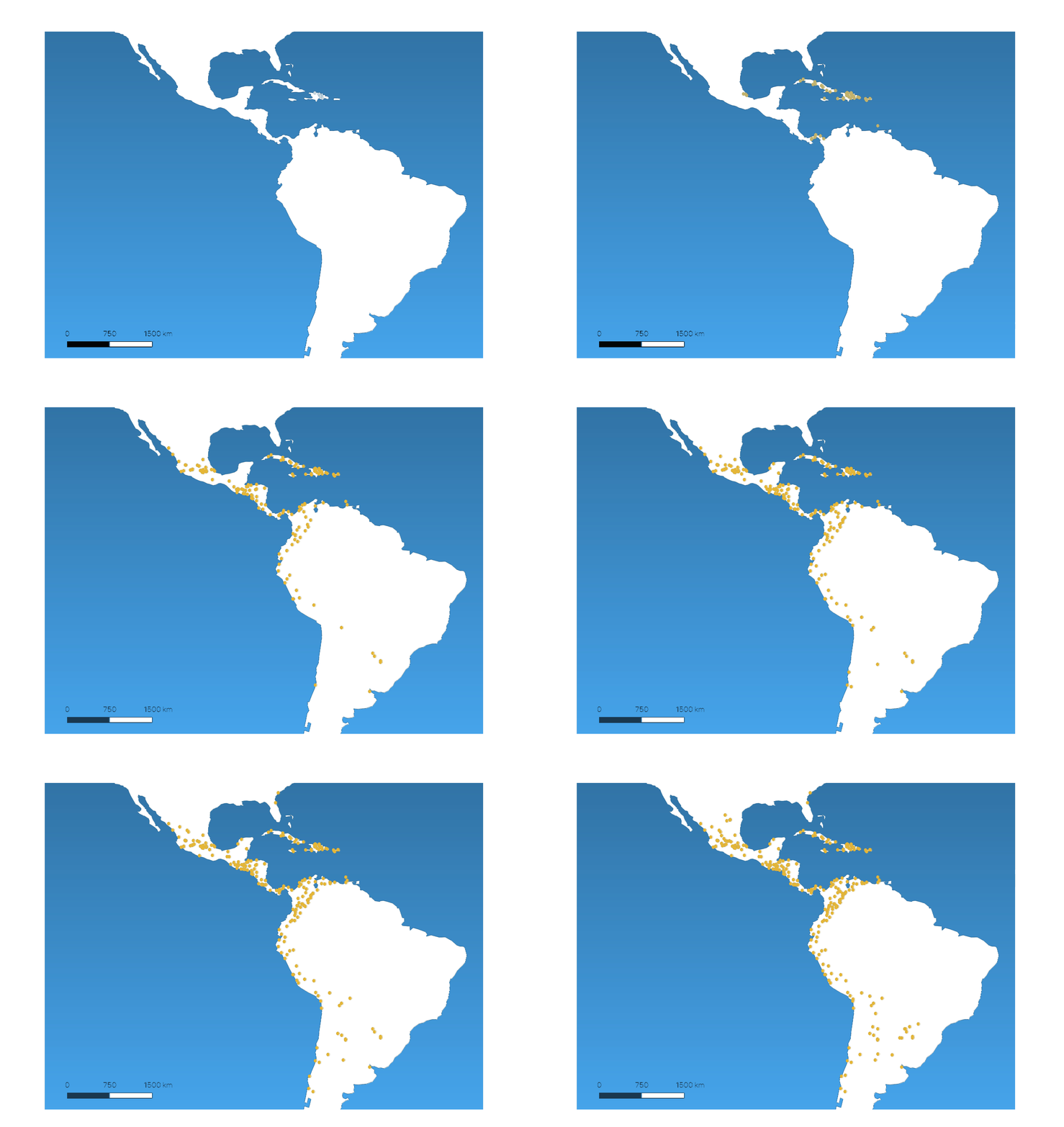
Evolution of Spanish Settlements in the Americas over time
The maps recreate the foundations of Spanish urban centers between 1492 and 1600. Each point represents a city or town established during this formative period of colonial expansion—an era when Spain's imperial presence extended from the Caribbean to the Andes and beyond.
Our Research Agenda
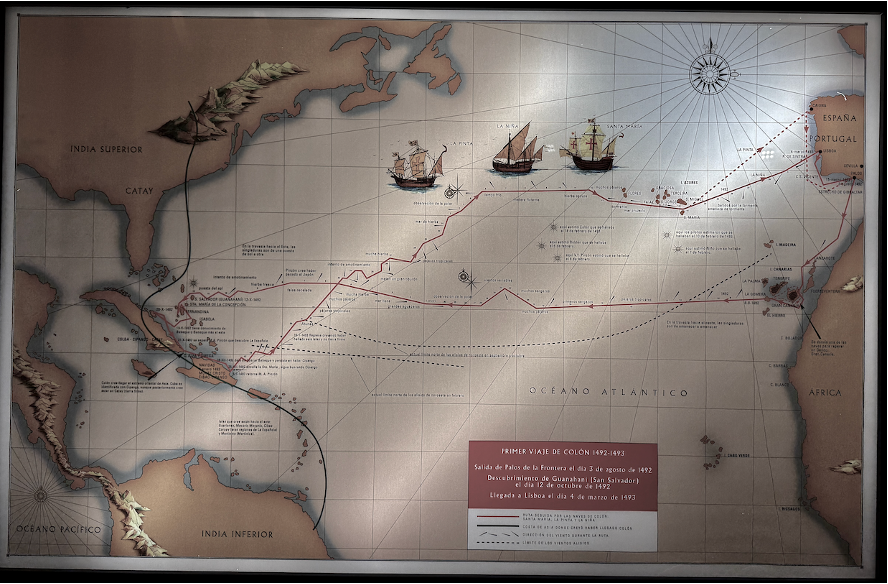
Trade routes were the lifelines of the Spanish Empire. In the early decades after 1492, the first maritime circuits connected the Iberian Peninsula to the Caribbean. By the mid-1500s, the Spanish Crown formalized the flota and galleon system, known as the Carrera de Indias, establishing regularized routes between Seville (later Cádiz) and key American ports.
Connecting Worlds: Trade Routes and the Movement of People
Our project brings together a growing network of collaborators across the world—historians, economists, sociologists, and data scientists—dedicated to reimagining the history of the Spanish Empire through new digital and quantitative methods. Together, we are building a comprehensive, open-access infrastructure that allows us to trace how people, institutions, and economies evolved across the Atlantic over more than three centuries.
Our research agenda connects multiple strands of inquiry: the migration of individuals and families between Spain and the Americas; the colonial origins of inequality and development; and the many systems of labor coercion that underpinned imperial wealth, from encomiendas to slavery and forced labor. We examine how people were linked between origins and destinations, forming enduring networks of kinship, commerce, and mobility.